OK this one is for the architects between us...
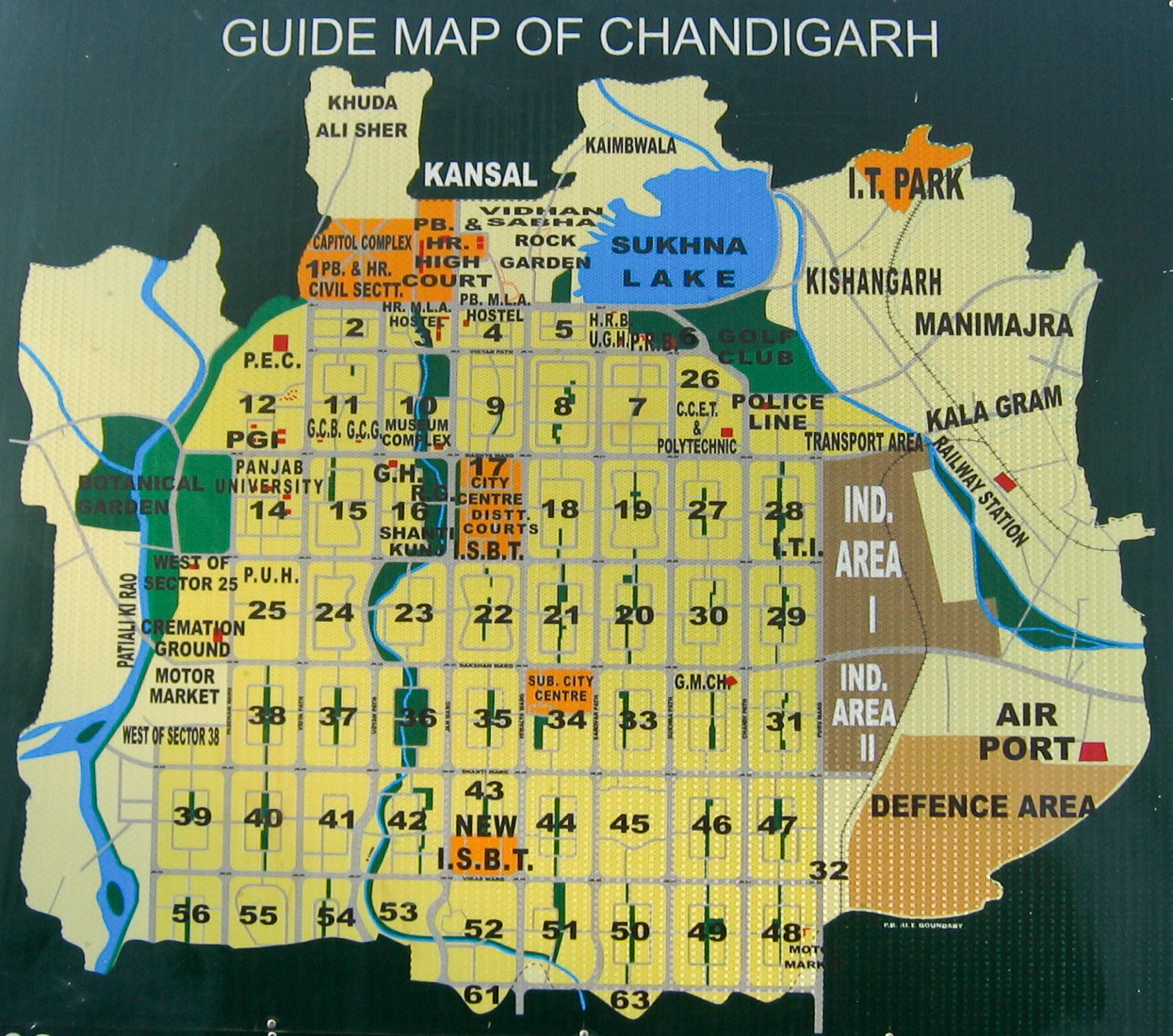
Once you arrive you can see and feel the difference. Roads are wide, there is no traffic jam even at rush hour, the scale is made for cars rather than people, it is clean and there are a lot of trees. Ah forgot, there are - surprise surprise - no cows on the road. So, are we in Canberra? No, actually not, we are in Chandigarh - somewhere five hours by train North of Delhi. Unlike Canberra Chandigarh is not designed in circles around the parliament but in a massive grid with the capital sector to the North East. All of it happened in the 1950's when Le Corbusier (LC) got the job. Well he was lucky because the original architect wasn't. The original architect Maciej Nowicki died in a plane crash and his partner Albert Mayer didn't continue after his accident. So, LC came over to India with his cousin Piere Jeanneret and a team of architects. Besides the city master plan he built a couple of major buildings like the UT secretariat, the High Court, the Assembly, the Open Hand sculpture and some other civic buildings in the city and part of the Punjab University.
On the downside, it is a vast impersonal grid which seems to be out of scale once you are on foot. Distances are long and the urban spaces - there are plenty of them - are huge. The spaces seems to be empty (have you ever seen empty spaces in India?) during the day and I only saw some activity during the evening hours.
Chandigarh seems to be aware of the architectural heritage and kept LC's office building to give the Le Corbusier Centre a home. Even to visit the working High Court and the Secretariat is possible once you went through the registration process and got some important stamps from various government offices. The visitors book showed a lot of entries from all over the world, are they all architects? Well, the friendly lady from the office said that most are. Who else would go there? Once arrived at the UT secretariat, I was taken by a heavily armed soldier onto the roof and was allowed to take some shots from up there - the haze and the pollution weren't helping. Interior shots were not permitted and is - considering the desolate and sad state - probably a good idea. The buildings in principle show their age, concrete is crumbling everywhere and Indian maintenance seems to take it rather easy. So it is time to visit as long it is still there, it is falling apart.
more images here
 |
| source: internet |
 |
| Concrete heaven |
 |
| Old and New ?!? |
 |
| The Assembly |
 |
| Open Hand and High Court |
 |
| Grids... |
 |
| ...and more grids. |
 |
| Grid meets Free Form |
 |
Corbies famous roof garden - Indian style with tent for the canteen
cooks and their families who work in the top floor of the building |
 |
| View from the Secretariat towards Assembly and High Court |
 |
| High Court |
 |
| City Centre Public spaces - vast and empty... |
 |
| ...but with activation of the ground plane via outdoor offices. |
 |
| Crumbling concrete in the Architecture Museum |
 |
| Panjub University Building - by Piere Jeanneret |
 |
| source: internet |
Once you had enough of crumbling concrete, grids, super grids and the occasional free form, there is the anti modernist rock garden by Nek Chand, also called the Junk Genius. It is one of the major tourist attractions in town and it was busy, very busy.
more pictures of Nek's garden
 |
| Another work of art - how are they doing them? |